Author: Tahir Chandia

  • How Family Office Strategy Supports Long-Term Wealth Preservation 

    How Family Office Strategy Supports Long-Term Wealth Preservation 

    Wealth preservation depends on more than investment performance. As family wealth expands across operating businesses, investment portfolios, property and international structures, oversight can become increasingly complex. Multiple jurisdictions, changing regulations, family stakeholders and succession priorities may create fragmented reporting and decision-making.

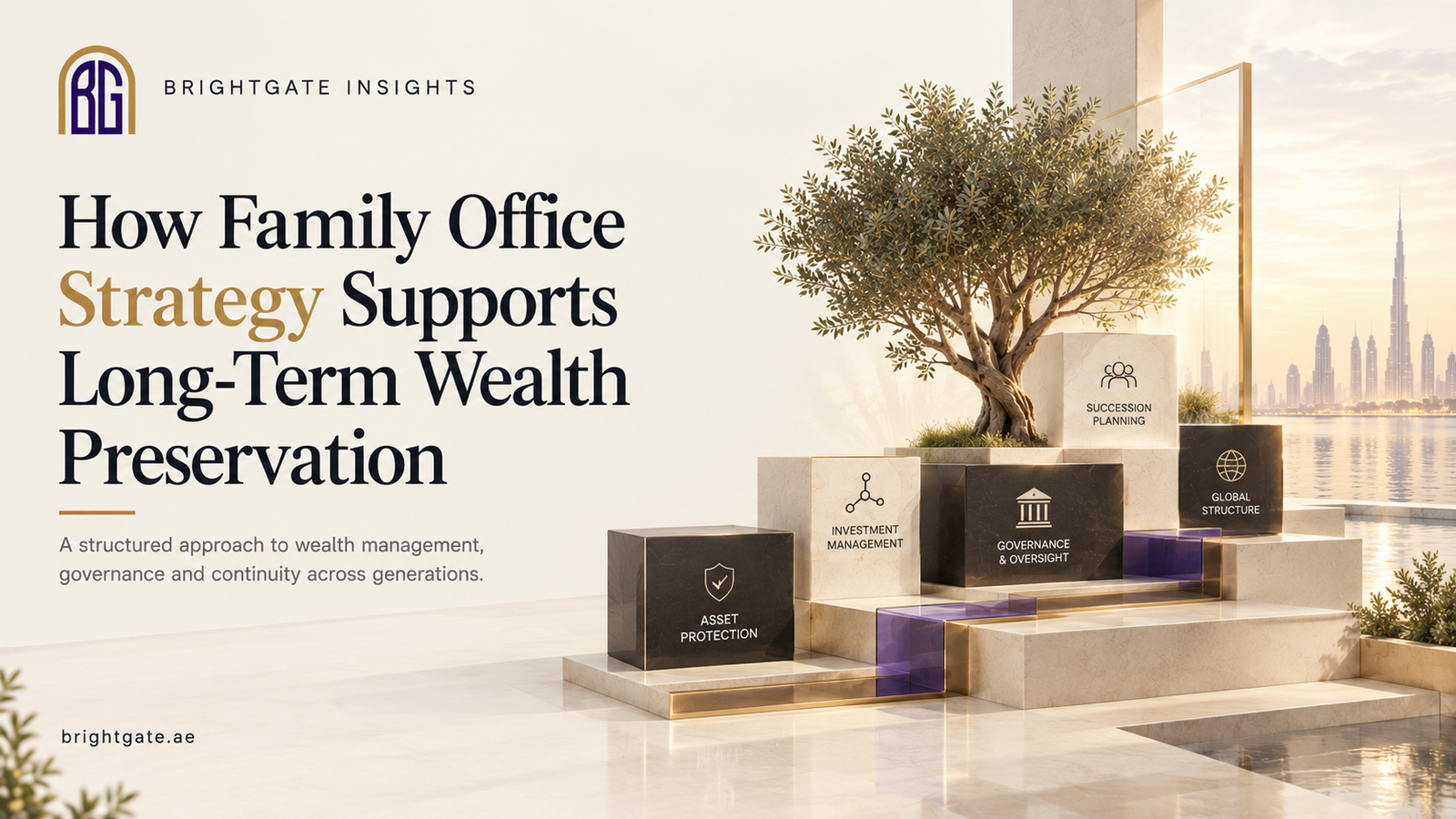
    A family office strategy provides a coordinated framework for family governance, wealth oversight, risk management and succession planning. Rather than treating each asset, entity or professional relationship separately, it helps families align reporting, responsibilities and decision-making with their long-term objectives across generations. 

    Understanding Wealth Beyond Investment Performance

    Portfolio management is only one element of long-term wealth preservation. Family wealth may include operating businesses, investment portfolios, real estate, holding companies, trusts, foundations and other cross-border structures. Each component may involve different ownership, reporting, liquidity, governance and professional-advisory requirements.

    A family office strategy can bring these elements into a coordinated oversight model through consolidated reporting, defined decision rights, adviser coordination and regular strategic review. This gives the family greater visibility across its assets, exposures and obligations while allowing individual decisions to be assessed against wider family objectives.

    Creating a Framework for Multi-Generational Continuity

    Multi-generational continuity requires more than transferring assets to beneficiaries. Families may also need clear governance processes that define responsibilities, decision-making authority, communication procedures and the involvement of future generations.

    Depending on the family’s circumstances, the governance framework may include a family council, investment committee, family constitution, succession policies or defined reporting responsibilities. Succession planning may also address ownership transitions, leadership continuity, beneficiary preparation and the future stewardship of family businesses and investment holdings.

    Treating succession as an ongoing process can help families reduce uncertainty and create greater alignment between current decision-makers and future stakeholders. 

    Managing Complexity Across Global Assets

    Contemporary wealth systems are often not limited to a single market. Families can have assets in various countries, have business interests in various regions and employ various professional advisers. This complexity may pose operational problems when information is spread out among various providers and reporting systems. A family office approach assists in centralising control and enhancing coordination.

    As an illustration, families might require transparency in international real estate portfolios, personal investment vehicles, operating businesses, and financial resources. Better decision-making can be facilitated by consolidated reporting structures, which will give a better picture of the overall performance and exposure.

    Global wealth often requires coordinated oversight rather than isolated management of individual assets. A family office setting assists in establishing that coordination and aids in long-term strategic goals. 

    Wealth Preservation Requires More Than Investment Risk Management 

    Risk of investment is not the only part of wealth preservation. There are also operational, reputational and succession risks to families. An organized family office system can be used to detect these risks before they become serious issues. The aim is not to remove uncertainty. Rather, it is to develop procedures that enhance preparedness and supervision.

    Risk management tends to be a continuous discipline as wealth structures grow more complex, as opposed to a periodic review process. Families, which are more active in evaluating vulnerabilities, are better placed to address emerging situations. This wider view of risk assists in sustaining resilience and maintaining flexibility to opportunities in the future. 

    The Role of Strategic Advisory Coordination

    International families often work with legal advisers, tax specialists, accountants, investment managers, private banks, fiduciaries and other independent professionals. Without a central coordination framework, reporting may become fragmented and different advisers may work without a complete view of the family’s wider objectives.

    A family office strategy can clarify professional responsibilities, reporting lines and decision-making processes so specialist advice can be considered within one coordinated framework. Bright Gate Group advises on family office models, governance requirements and specialist coordination. Legal, tax, investment, fiduciary, banking and other regulated services remain with the relevant qualified independent providers. 

    Why Location Can Influence Family Office Strategy

    Family office planning usually includes the consideration of the location of administration and specialist coordination. In the case of internationally active families, the location selected may have an impact on the effectiveness with which advisers, banking relationships and operational oversight are managed across multiple jurisdictions. Places like Dubai are considered by many families due to their connectivity, business infrastructure and access to professional advisory networks. Strategic sites can help in coordinating and managing interests worldwide.

    But the appropriateness of any jurisdiction is based on the goals of the family, asset base and operational requirements. It is best to think of family office planning as a subset of a larger strategic plan and not as a standalone entity. 

    Aligning Wealth With Future Objectives

    Wealth preservation is not limited to protecting asset values. It also involves aligning family wealth with long-term priorities as businesses expand, new generations become involved and international interests evolve.

    An effective family office framework should be structured enough to support consistent governance while remaining flexible enough to adapt to changing family and business circumstances. This balance can help families respond to new opportunities without losing continuity across generations.  

    Preserving More Than Wealth

    Long-term success is measured by more than asset values. Families may also seek to preserve continuity, governance, institutional knowledge and the ability to make informed decisions across generations. A family office strategy can support these objectives by bringing oversight, reporting, professional coordination and succession planning into a unified framework.

    Bright Gate Group advises families on family office strategy, governance models, wealth-oversight structures and long-term planning priorities. Our role is to help evaluate and coordinate an appropriate framework based on the family’s assets, jurisdictions, operating needs and future objectives. 
  • Crypto License Advisory: Let Bright Gate Group Simplify the Process

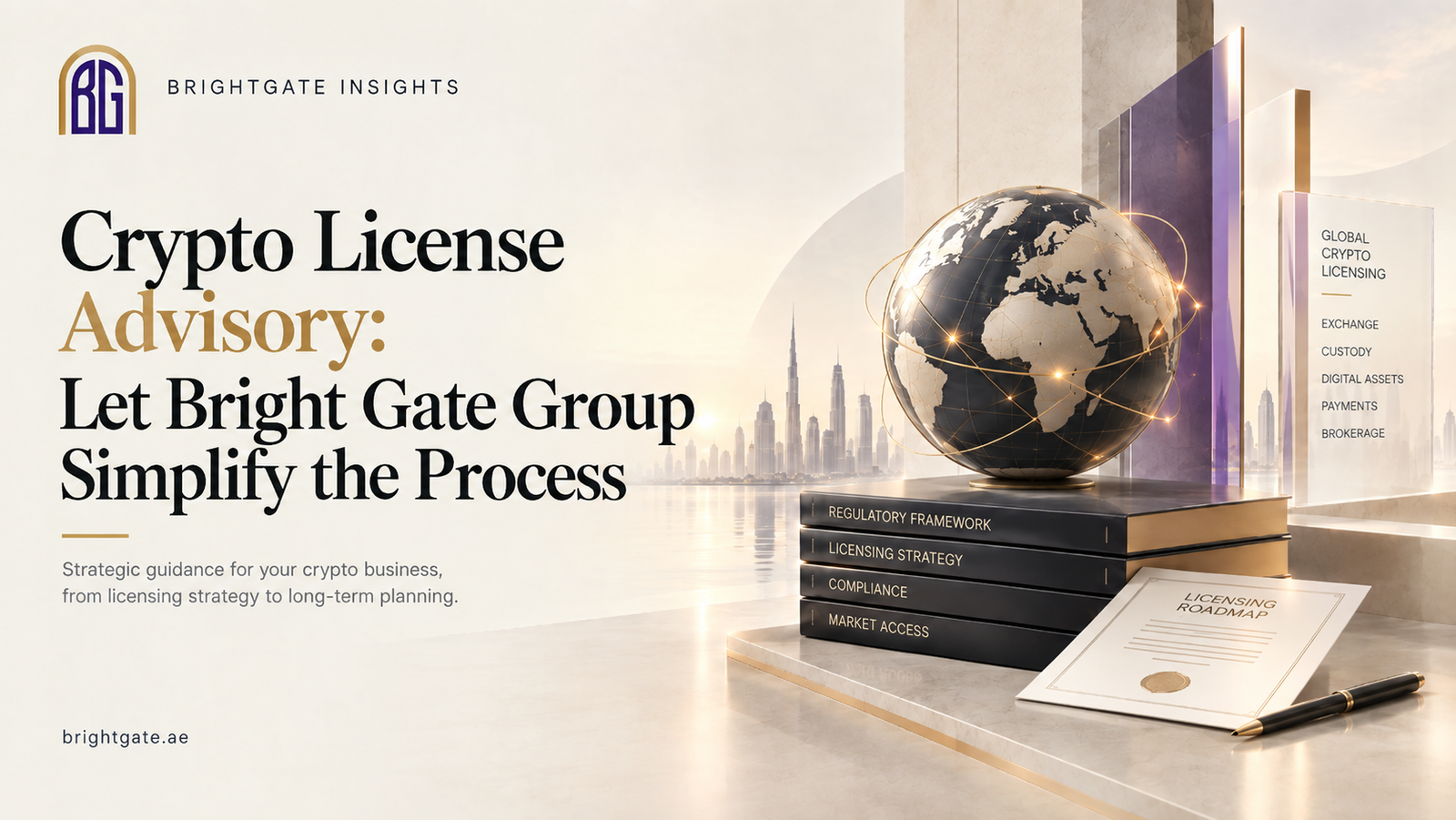
    Crypto License Advisory: Let Bright Gate Group Simplify the Process

    The digital asset industry has evolved considerably over the last decade. As businesses explore exchange operations, digital asset services, and technology-driven financial ventures, Crypto License Advisory has become an increasingly important part of long-term planning. What started as a niche market has developed into a broader digital asset economy. Businesses now explore this sector for different commercial purposes, from exchange and brokerage models to infrastructure and technology-led services. As the sector expands, licensing strategy is increasingly being considered before a business commits to its operating model or enters a target market. 

    Most founders are initially concerned with technology, platform development, liquidity, and customer acquisition. These areas still matter, but licensing can influence how the business is structured and where it may operate. It can also shape decisions around the operating model, target markets, and future development. That is why the role of professional advisory support has become a more and more important component of the planning process.

     Why Crypto License Advisory Should Start Early 

    Many digital asset businesses begin with a commercial idea before assessing the regulatory implications attached to their proposed activities. While this approach may seem practical at first, it can create challenges when licensing requirements are reviewed later in the development process.

    Licensing works best when it is considered alongside the wider business structure from the beginning. The assessment process may be affected by decisions on corporate structure, ownership structure, operations, target markets, technology infrastructure, and future expansion plans.

    Companies that consider these factors at an early stage tend to have a better understanding of the priorities of implementation and long-term goals. Instead of licensing being a separate requirement, successful projects usually consider it as part of a larger commercial strategy. 

    Digital Asset Businesses Continue to Evolve

    The digital asset sector now includes a wide range of business models that differ significantly in their operational requirements. A business focused on exchange activities may face different implementation considerations than a venture centred on custody solutions, payment infrastructure, brokerage services, or token-related ecosystems. Understanding these distinctions at an early stage can help businesses assess which licensing pathways may be more relevant to their long-term objectives. 

    Professional advisory services assist companies in evaluating the compatibility of their intended operations with the possible licensing avenues. The purpose is not simply to identify a jurisdiction. It is to understand how the proposed activities fit with potential licensing routes, operational requirements, and the wider commercial plan. 

    Jurisdiction Selection Is About More Than Location

    The choice of the right jurisdiction is one of the most crucial decisions in any licensing project. Businesses often compare jurisdictions based on how well each option fits their proposed activities and wider commercial objectives. Jurisdiction assessment involves much more than choosing a location on a map.  Suitability may be affected by factors like ownership structure, operational activities, reporting requirements, implementation timelines and long-term commercial objectives.

    Bright Gate Group advises businesses exploring digital asset licensing and supports the evaluation of suitable jurisdictions and implementation options. This systematic strategy may assist in establishing a better fit between licensing factors and business needs. 

    Aligning Business Structure With Licensing Objectives

    A licensing project is frequently tightly linked with the decisions of company formation and corporate structuring. The legal form chosen when starting a project can affect the flexibility of its operations, shareholder involvement, and future development possibilities. This is why business structure planning is often carried out in conjunction with licensing evaluations.

    Future plans should also be considered before the structure is finalised. If the business later enters new markets or introduces additional activities, an unsuitable structure can create unnecessary complexity. A structure that supports short term goals must, in ideal circumstances, be able to support future growth without the need to undergo unnecessary restructuring.

    When these factors are taken into account, businesses tend to create a more unified implementation strategy that will facilitate short-term and long-term objectives. 

    Building the Right Operating Model 

    Before implementation begins, businesses need a clear view of how the operation will function in practice. This includes understanding how customers will interact with the business and how responsibilities will be handled internally. An operating model can assist in supporting future scalability and enhance coordination within the broader organisation. 

    Good operational planning can be used to show how the business is going to operate. It also offers more insight into the responsibilities, procedures, and priorities in implementation. Companies that take time to prepare their operations tend to have a more structured development and better internal coordination. 

    Technology and Infrastructure Considerations

    Most digital asset projects are centrally focused on technology. Regardless of whether a business aims to establish an exchange environment, a brokerage platform, a custody infrastructure or any other digital asset service, technology choices affect operations and scalability.

    Depending on the business model, infrastructure planning may involve wallet architecture, API connectivity, transaction processing, customer management systems, access controls, and operational monitoring. These components should be assessed as part of the wider technology framework rather than selected independently. 

    Software selection is not usually the end of infrastructure planning. Companies can consider security frameworks, wallet environments, transaction processing systems, operational monitoring tools, customer management platforms and data management procedures.

    It is not merely the implementation of technology. Technology should support the planned business model without becoming a constraint as activity grows. The right infrastructure can also make it easier to connect different operational systems as the business develops. This larger view assists companies in not looking at technology as an isolated project that is not connected to the overall business goals. 

    Regulatory Change Is an Ongoing Consideration 

    Digital asset regulations continue to evolve across different jurisdictions. Businesses often assess how future regulatory developments could influence operations, reporting requirements and strategic planning. A licensing framework that supports adaptability can help organisations respond more effectively as regulatory environments mature over time. 

    For businesses planning internationally, this makes ongoing regulatory awareness an important part of strategic planning. A structure that is suitable today may need to be reviewed if the business changes its activities, target markets, or operating model. 

    Preparing for Future Expansion 

    Most digital asset businesses begin with a defined service or target market. Over time, they may explore additional products, enter new jurisdictions, or expand their operational scope. These possibilities are worth considering when the initial licensing strategy is being developed.

    A forward-looking structure can provide greater flexibility as the business develops. It allows future plans to be considered without making today’s setup unnecessarily complex. This does not mean planning every future move in advance. It means leaving enough strategic room for the business to adapt.

    Turn Licensing Planning Into a Long-Term Advantage

    Strong digital asset businesses are not built on speed alone. They are built on decisions that can stand up as the business grows. When the licensing strategy, operational readiness and the long-term objectives are aligned at the start, the businesses tend to be better placed to handle growth opportunities in the future. Crypto License Advisory is most useful when it is a component of a broader business approach and not an administrative exercise in its own right.

    Bright Gate Group advises on digital asset licensing projects and supports the evaluation of jurisdiction options, operational structures and implementation requirements. Explore the firm’s Crypto Licensing advisory services and assess which approach best aligns with your long-term business objectives. 

  • From Structuring to Operations: How Bright Gate Group Simplifies Family Office Setup in Dubai

    From Structuring to Operations: How Bright Gate Group Simplifies Family Office Setup in Dubai

    As family wealth expands across different jurisdictions, businesses and asset classes, managing everything through informal arrangements becomes increasingly difficult. A Family Office Setup can create a structured environment that brings greater clarity to wealth planning, specialist coordination and long-term decision-making. Rather than managing multiple advisers and assets through disconnected processes, families can establish a central framework that supports oversight and continuity. It can also help organise banking relationships and specialist advisers within a more coordinated operating framework. 

    But creating a family office is not a universal endeavor. A family that has concentrated business interests might need a different structure as compared to a multi-generational family that has international assets and multiple operating entities. The most suitable structure depends on how the family operates today and how it expects its responsibilities to evolve in the future. 

    This is the advisory and coordination family office structuring of Bright Gate Group, which is first to know the circumstances of the family and then evaluate what operating model can serve its priorities, resources and complexity. 

    Why Dubai Can Support a Modern Family Office Structure

    Dubai can offer a practical environment for families seeking to structure and manage complex international wealth. Its global connectivity, sophisticated financial ecosystem, and access to professional advisory networks can support families with diverse cross-border interests. A modern family office may require coordinated planning across wealth structuring, investment administration, succession considerations, banking relationships, and international assets. 

    For families with international interests, Dubai can also serve as a practical coordination point between different regions. This can help centralise reporting, adviser communication and strategic planning within a single operating framework while maintaining visibility across global assets. 

    Dubai’s position as a regional business hub can also make it suitable for families managing interests across multiple markets. With the right structure and professional guidance, families can develop a flexible framework that supports long-term wealth management objectives while adapting to changing family and business needs.

    Why Global Families Continue to Choose Dubai 

    Dubai has become an increasingly important destination for international families seeking a structured environment for wealth administration and long-term planning. Access to international banking networks, specialist advisers, professional service providers and globally connected business infrastructure can support families with interests across multiple jurisdictions. 

    Dubai also offers access to recognised family office frameworks and wealth structuring environments that can support governance, succession planning and long-term asset administration. For families managing international businesses, investment portfolios and cross-border holdings, the city can serve as a central coordination point that connects different parts of the wealth structure within a single operating framework. 

    Defining the Right Family Office Model 

    Every family office project should begin with a clear understanding of the family’s objectives, governance preferences and operational complexity, as these factors often influence the most suitable structure. Some families prefer dedicated internal teams, while others rely on specialist providers coordinated through a central framework. The choice often depends on the complexity of the family’s affairs and the level of involvement they want to maintain. A Single Family Office may offer a specialized setting to a single family whereas a Multi-Family Office may share resources among multiple families. A Virtual Family Office can be more dependent on coordinated external specialists.

    Bright Gate Group supports families in understanding how such models can fit their situations and operating needs. This evaluation-based strategy can assist in explaining which framework is feasible prior to the substantial investment of resources. 

    Mapping Wealth Across Jurisdictions 

    Internationally wealthy families tend to operate their assets across multiple entities and jurisdictions. This may complicate reporting, administration and adviser coordination since the information is distributed in various structures. A family office will be able to establish a central structure to comprehend these relationships and have clearer control. 

    Without a central framework, different advisers may operate independently, which can reduce visibility across the wider wealth structure. A coordinated model can help improve information flow and support more informed decision-making. 

    Building an Operating Model That Works

    After identifying the desired structure, the focus can shift to practical operations. It is here that most family office projects get more detailed. An operating office must have well-defined roles. Clear responsibility allocation becomes increasingly important as family activities expand. 

    Banking relationships, reporting requirements and adviser coordination should operate within a framework that allows information to move efficiently between all parties involved. The precise resource model is determined by the type of approach adopted by the family: internal, shared, or virtual.

    Management of family offices is thus not just about overseeing finances. It may involve the organization of professional relationships, administrative procedures, reporting, governance procedures, and family priorities. Bright Gate Group advises on these requirements and coordinates relevant specialist input where appropriate. 

    Integrating Wealth Planning Into the Structure

    Family wealth may include operating businesses, investment portfolios, property, private banking relationships, trusts, foundations, and other forms. The consideration of these elements as entirely independent may complicate long-term planning. A well-coordinated wealth planning strategy takes into account the interactions of various components of the family wealth with larger goals. 

    The objective is not to create additional layers of complexity. It is to establish a framework that helps the family manage complexity more effectively. It is to create a more explicit framework of complexity management. This may include the examination of ownership structures, asset structures, succession issues, and family relationships and independent professional advisers. 

    Family wealth management can also involve cross-jurisdictional coordination in the case of families with significant international interests. Banking, legal, tax, investment and corporate specialists might have individual roles. Bright Gate Group is an adviser and coordinator with these regulated or specialist activities being retained with the relevant qualified independent providers. 

    Technology Should Follow the Operating Model

    Technology can become increasingly valuable as the number of assets, entities, jurisdictions, and advisers increases. A family office might require a safe place to store financial information and documentation. Reporting systems can be connected with entity records, administrative workflows and document management processes to improve visibility across the wider structure. A well-organised information environment can improve visibility across the family office while reducing reliance on disconnected reporting systems. 

    Security is also a priority. The technology environment should also be designed to provide security. Sensitive information can be limited to authorised persons by access controls and user permissions; secure document storage and audit trails can enhance accountability throughout the office. A Virtual Family Office can be more dependent on safe collaboration systems and external specialist workflows, whereas a Single Family Office can need internal specific infrastructure. 

    Coordinating Specialist Relationships

    Even a well-established family office can rely on the services of external professionals in those areas that demand independent professional knowledge. Specialist relationships can include private banking, legal structuring, tax advisory, accounting, investment management, insurance, succession planning and other professional areas depending on the circumstances of the family.

    When multiple advisers operate independently, communication gaps and duplicated efforts can emerge over time. A coordination structure can be used to facilitate a better distribution of responsibilities and minimize overlaps.

    Bright Gate Group advises on family office strategy and helps coordinate appropriate specialist relationships around the family’s broader objectives. The ultimate legal, tax, investment, banking or regulatory determinations are left to the applicable independent qualified providers. 

    Preparing the Structure for Future Generations

    A family office strategy must not be created in accordance with the current needs. Family priorities rarely remain static over time. New generations can be engaged, assets can be transferred across jurisdictions, business interests can be increased, and governance priorities can change. Effective wealth planning often requires a longer-term perspective that extends beyond current operational needs. The design must be flexible enough to meet the evolving tasks without having to redesign it unnecessarily.

    This is especially applicable to succession planning. A family office may offer a structured framework by which succession goals, governance structures and professional associations can be aligned over time. This intergenerational approach assists in transforming a family office from an administrative role into a more sustainable component of the family wealth structure. 

    Building a Family Office That Evolves With the Family 

    A successful family office is rarely defined by size. It is defined by how effectively it supports the family’s objectives across generations. The structure is what provides the family with more definite control over it, as well as aligns the family with its wealth, governance requirements, and long-term orientation. Family Office Setup must then commence with strategy and then proceed to implementation. 

    Bright Gate Group advises on family office models, wealth planning, jurisdiction considerations, and specialist coordination, helping families create a practical framework around their priorities. Explore Bright Gate Group’s Family Office Strategy advisory to assess a structure aligned with the family’s long-term wealth and governance objectives.

  • How Professional Forex Brokerage Setup Services Simplify the Launch Process

    How Professional Forex Brokerage Setup Services Simplify the Launch Process

    Launching a forex brokerage involves more than selecting a trading platform and developing a brand. The company requires a clear framework for linking technology, liquidity, compliance, banking, and daily operations from the start. Planning of these areas independently may result in delays during implementation due to gaps between providers and systems.

    Professional forex brokerage setup services help bring these requirements into a coordinated plan. Founders can assess the compatibility of the various components and determine where expert providers are necessary instead of viewing each aspect of the launch as an independent undertaking. This provides a better roadmap between the original business idea and operational preparedness.

    Why Brokerage Launch Projects Become Complex

    The modern forex broker setup involves much more than the establishment of a company and the choice of a platform. A brokerage launch involves several connected decisions. The jurisdiction can affect banking options and the regulatory pathway, while technology choices can influence liquidity connectivity, reporting, execution workflows, and client management. These relationships make it difficult to plan each requirement in isolation. A coordinated approach helps founders understand these dependencies before implementation begins. 

    Building the Right Foundation Before Launch

    The planning process begins by defining where the brokerage intends to operate, which clients it aims to serve, what instruments it plans to offer, and how trading will be structured. These choices give a foundation for considering the technology, liquidity, compliance, and operational infrastructure needed in the future.

    Planning also assists in determining requirements that would otherwise be ignored until the implementation has already started. These dependencies can be addressed early on to minimize the number of changes that are not necessary and make the entire setup more organized.

    Technology Infrastructure Requires Careful Coordination

    The chosen environment affects the client experience, reporting and operational management. A common forex brokerage setup can have a number of interrelated systems operating concurrently. These often include:

    • Trading Platform Solutions
    • CRM Integration
    • Back Office Systems
    • Trading Server Infrastructure
    • Brokerage Software Solutions

    Platforms such as MetaTrader 4 and MetaTrader 5 remain widely used, while other trading environments may be suitable depending on the business model and asset coverage. Technology planning is usually not limited to platform selection but also covers hosting architecture, reporting environments, API connectivity, and operational monitoring systems.  

    Simplifying Platform Integration and Connectivity

    Ensuring that various systems communicate effectively is one of the most time-consuming aspects of an online forex broker setup. The lack of coordination can result in delays and higher costs of implementation. A coordinated setup allows system compatibility to be assessed before deployment, reducing the risk of integration issues and operational bottlenecks once the brokerage becomes active. Companies planning a Forex Brokerage Setup project usually evaluate technology needs and business goals to make sure that infrastructure is scalable. 

    Liquidity Infrastructure Is Critical to Launch Readiness

    Liquidity planning should be considered alongside the brokerage’s trading model and technology environment. The applicable requirements may differ based on the instruments available, anticipated trading volume, model of execution, client profile, and technology setup.

    An appropriate structure can include a variety of forex liquidity providers, aggregation technology, bridge connectivity or other execution infrastructure. The goal is not merely to create access to liquidity, but to make sure that the chosen arrangement fits into the operating model and technical environment of the brokerage.

    Compliance Should Be Integrated Early

    Compliance considerations can influence client onboarding, internal controls, documentation, transaction monitoring, technology requirements, and day-to-day operational processes. The specific requirements depend on the brokerage’s structure, jurisdiction, activities, and regulatory position. Bringing these considerations into the planning stage can help reduce the need for major changes after technology and operational systems have already been selected. 

    Improving Client Onboarding and Operational Efficiency

    Pricing and execution are not the only ways that brokerages compete today. Efficiency in operations is significant in the general performance of a business. 

    By ensuring these systems are well connected, businesses have enhanced visibility of client activity, payments, compliance workflows and operational performance. Appropriate automation can reduce manual administration and help internal teams focus on higher-value operational and growth activities. The contemporary CRM and back-office settings often become a key component of operational scalability over the long term. 

    Accelerating the Path to Market 

    Implementation can also be easier to handle through a coordinated setup. A brokerage initiative can have multiple specialist providers in terms of technology, liquidity, banking, payments, compliance, and operations. It may be hard to keep a clear picture of dependencies and the priorities of implementation when managing each relationship separately.

    A systematic advisory process assists in bringing these requirements into one roadmap and it becomes easier to determine what must occur first and which decisions require others to be made. This can provide founders with a better perspective on the way between planning and launch.

    Supporting Future Growth Beyond Launch

    The start of the business is not the end. Infrastructure requirements tend to be more complicated as the level of trading activity rises. Numerous expanding brokerages ultimately consider expanded liquidity relationships & enhanced reporting capabilities.

    A scalable architecture allows businesses to scale without having to redesign the entire infrastructure. Professional setup services assist in developing a framework that can sustain future growth without compromising operational efficiency. This is particularly relevant for businesses considering a broader company formation strategy that includes long-term expansion goals. 

    Building a More Structured Brokerage Launch 

    A successful Forex Brokerage Setup is not defined by a single platform or infrastructure decision. Companies that match technology, liquidity, compliance, and operational needs early on tend to be in a better position to grow in the long term. Brightgate Group advises on brokerage launch projects and supports the evaluation and coordination of specialist providers, technology environments and operational frameworks. This approach helps businesses create a clearer structure around their brokerage objectives and implementation requirements.

  • Forex and CFD Brokerage Formation Solutions for International Markets

    Forex and CFD Brokerage Formation Solutions for International Markets

    Establishing a Forex and CFD Brokerage for international markets requires more than selecting a trading platform and launching a website. Modern brokerage businesses operate within a highly competitive environment where technology, operational planning, market access, and business structure all play an important role in long-term success.

    As international financial markets continue to expand, many entrepreneurs, financial groups, and investment firms are exploring opportunities within the brokerage sector. While the opportunity can be significant, the development process often involves multiple stages that must work together effectively from the beginning. A structured approach helps create a stronger foundation while supporting future growth objectives across different regions and client segments.

    Understanding the Modern Brokerage Environment

    The brokerage sector has been changing significantly in the past ten years. The expectations of clients are growing and the level of technology is getting higher. Companies venturing into the industry need to think through the operating model that will enable it to grow over time instead of concentrating on the launch operations.

    The key to a successful forex and CFD brokerage is often a well-defined business strategy that helps to match the operational needs with the commercial goals. The choices made at the initial planning phases often affect scalability and future expansion opportunities. This is the reason why most companies start by assessing their market goals prior to undertaking infrastructure choices. 

    Selecting the Appropriate Business Model

    All CFD brokers have a different manner of operation according to the market and their commercial interests. There are those businesses that target retail players and those that target professional and institutional market segments.

    The model selected affects the technology needs, operations, client onboarding processes, and general business planning. Having a clear picture of the targeted market will assist businesses in developing a framework that will facilitate the short-term needs as well as the long-term developmental prospects. The best structures are the ones that are planned with long-term goals in mind as opposed to short-term launch plans. 

    Planning International Market Entry

    An effective forex broker arrangement starts with proper planning. The international markets have various commercial environments and operational needs that ought to be evaluated before the commencement of the implementation.

    Market-entry planning can entail the examination of corporate structure alternatives and client acquisition plans. Every decision is part of the general business structure. When these factors are evaluated in combination, the businesses are usually in a better position to proceed with more clarity and confidence. 

    Building an Effective Operational Framework

    The quality of an operational structure often determines the strength of a CFD broker set-up. The processes that seem to be easy at the initial launch phase may prove to be more crucial as the trading volume and number of clients increase.

    Operational planning is normally concerned with the establishment of a condition where various business functions can collaborate effectively. Onboarding of clients, internal reporting, processing of payments and administration of business all lead to overall effectiveness of the organisation. Companies that take time in operational planning tend to have an easier time controlling future expansion as well as being consistent in various sections of the company. 

    Technology Remains Central to Brokerage Development

    One of the most significant aspects of any online trading brokerage is technology. The contemporary market players demand stable systems and effective account-management features.

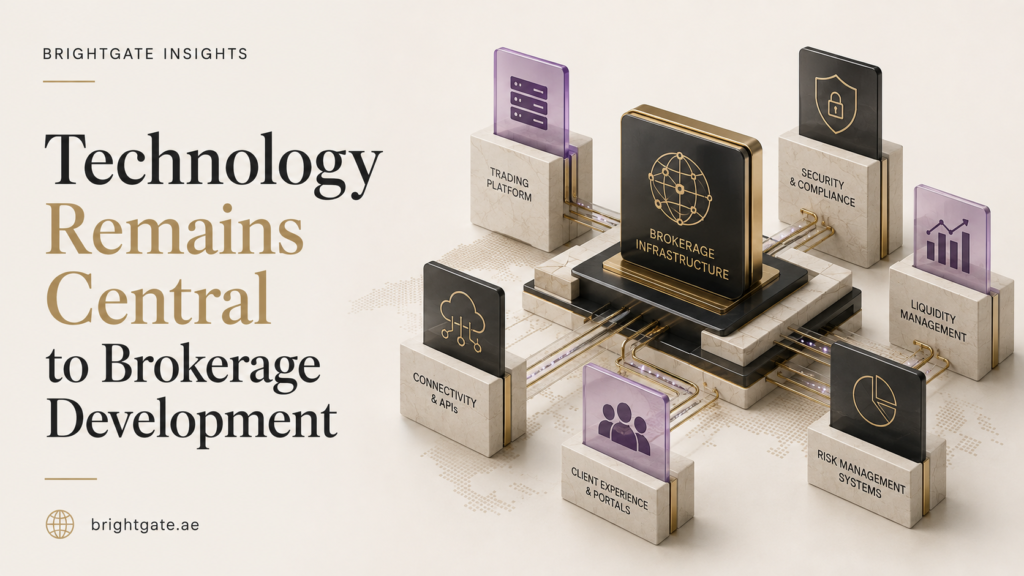
    The technology infrastructure can consist of trading systems, client management systems, reporting systems, hosting systems and connectivity infrastructure. It is not merely about installing software. The decisions made on technology must be in line with the efficiency of operations and must provide a structure that can be adapted to meet future business needs. Technology planning is one of the major aspects of long-term development of brokerage as the expectations of clients keep changing. 

    Creating a Strong Client Experience

    Every forex trading broker operates within an environment where client experience can influence long-term business performance. Market participants increasingly expect smooth onboarding processes, reliable trading environments, and efficient operational support.

    Businesses that focus on creating a structured client journey often benefit from stronger client engagement and improved operational consistency. A well-organised framework can also support future growth by reducing inefficiencies and creating a more scalable operating environment. Client experience is no longer viewed as a separate function. It has become an important part of overall business strategy.

    Expanding Beyond Traditional Market Coverage

    The number of businesses venturing into the brokerage industry is no longer concerned with currency products alone. A contemporary CFD trading broker can pursue the opportunities of a broader scope of financial instruments to facilitate broader market engagement.

    Client demand and long-term commercial objectives tend to affect expansion strategies. Companies that strategize to diversify in the future earlier on can develop a more adaptable structure that can accommodate the changing market opportunities. Growth is easier to handle when infrastructure and operational planning are aligned with future development objectives. 

    Long-Term Brokerage Commercial Strategy 

    The retail brokerage business cannot be strong just because of market participation. The effectiveness with which the business handles operations and future development initiatives tends to affect long-term performance.

    Commercial sustainability involves a compromise between growth goals and operational capacity. Companies that develop feasible development strategies tend to be in a better position to adapt to the evolving market conditions without compromising on their operations. An organised business model assists in establishing higher visibility within the organisation and facilitates decision-making in the long-term. 

    Meeting the Needs of Professional Market Participants

    A more advanced level of operational planning and infrastructure coordination is often needed in an institutional brokerage environment. The market players are normally professionals who demand advanced operational structures that can facilitate more advanced needs.

    This may involve technology planning, operational reporting, connectivity considerations and broader infrastructure evaluation. Companies that are aimed at institutional markets can take advantage of the organized approach that takes into account the existing needs and the development opportunities. The preparation is significant in the establishment of the environment that can facilitate long-term institutional engagement.

    A Stronger Path Towards Brokerage Growth

    Launching a brokerage business is only the first step. Long-term success depends on how effectively business structure and growth planning work together over time. Businesses that approach development with a clear strategy are often better prepared for expansion and changing market conditions. Brightgate Group advises on forex and CFD brokerage formation projects and supports the evaluation of the operational frameworks required for international market participation and sustainable long-term growth.